
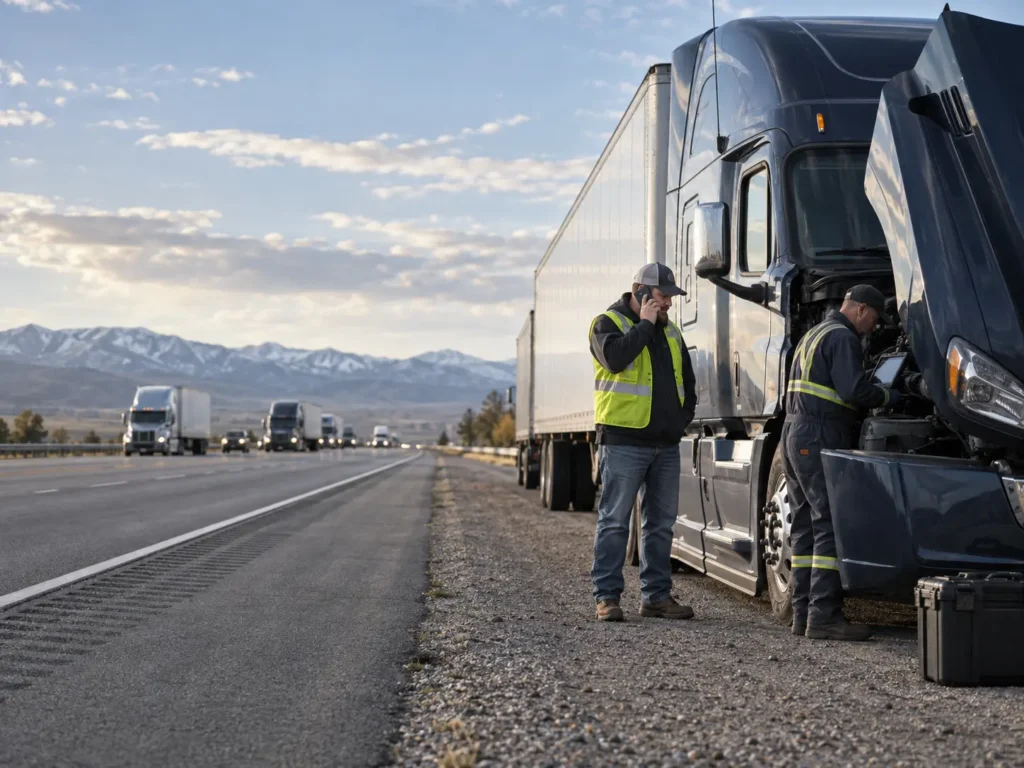
Rising repair costs are exposing a bigger transportation problem: disconnected operations
Fleet repair costs are rising, but unexpected downtime may be an even bigger financial problem.
A recent Commercial Carrier Journal report examining fleet maintenance challenges found that unscheduled repairs can cost up to nine times more than planned maintenance. Vehicle downtime can also reach approximately $760 per day per asset. The report further highlighted a major technology problem across the industry: only a small percentage of fleets have fully connected systems, leaving many companies to manually reconcile data across disconnected platforms.
The result is slower responses, delayed decision-making, and additional operational costs.
While maintenance technology can help fleets identify mechanical issues earlier, the broader transportation challenge remains the same. When a truck goes down, the disruption affects far more than the maintenance department. Dispatchers must assess the load, drivers need updated instructions, customers may require delivery updates, carriers may need to be contacted, and back-office teams must adjust their workflows.
The real cost of downtime increases when the people responsible for responding are working through disconnected systems.
Downtime is also a Transportation Coordination Problem
A truck breakdown can quickly become a logistics problem.
Information often has to move between drivers, dispatchers, fleet managers, carriers, brokers, shippers, customers, and back-office teams. If those stakeholders rely on separate portals, spreadsheets, emails, and phone calls, valuable time is spent simply gathering information and coordinating a response.
That is why reducing downtime is not only about identifying equipment problems faster. It is also about improving how transportation organizations communicate, coordinate, and act when disruptions occur.
Connected transportation technology can help reduce the operational impact of downtime by bringing stakeholders, workflows, and real-time information into one environment.
Faster Problem Resolution Requires Connected Stakeholders
Transportation disruptions become more expensive when communication is fragmented.
Consider a truck experiencing a mechanical issue while carrying an active shipment. The driver must report the problem. Dispatch needs to understand the status of the load. Operations may need to find another available truck or carrier. The customer may need updated delivery information.
Without a connected system, these updates can move slowly between different applications and communication channels.
Multi-Portal Access Connects the People Responsible for the Response
One of GRENNEX’s strongest capabilities is multi-portal access.
Drivers, dispatchers, carriers, brokers, shippers, customers, and back-office teams can work within the same connected logistics ecosystem while accessing information and workflows relevant to their specific roles. Instead of forcing every user into the same interface or process, GRENNEX provides role-based access that allows stakeholders to remain connected without losing the flexibility required for their responsibilities.
This becomes especially important when operational disruptions occur.
A driver can communicate an issue from the field. Dispatch can monitor the shipment and evaluate its impact. Operations teams can coordinate the next steps. Customers and other authorized stakeholders can receive relevant updates without employees manually transferring information between disconnected systems.
The Unified Logistics Platform helps reduce communication gaps by replacing fragmented coordination with a connected, multi-portal structure where stakeholders can work from the same operational environment.
This does not eliminate the mechanical problem itself. It helps the transportation organization respond to the consequences of that problem faster and with greater coordination.
Visibility Only Matters When Teams Can Act on It
Knowing that a problem exists does not automatically reduce downtime.
The CCJ report emphasized that fragmented data slows a fleet’s ability to identify issues and convert information into action. Transportation operations face a similar challenge. A company may have tracking data, dispatch information, driver updates, and customer records, but those resources provide limited value when they remain separated across different systems.
Transportation teams need visibility connected directly to operational workflows.
GRENNEX Combines Real-Time Visibility, Dispatch, and Workflow Management
GRENNEX’s Unified Logistics Transportation Management System brings several transportation functions into a centralized operational environment.
Its real-time visibility capabilities allow teams to monitor shipments, drivers, assets, delivery status, and operational activity without relying entirely on manual updates. When a delay or exception occurs, dispatchers and operations teams can identify what is happening and begin coordinating a response.
The platform also supports dispatch and load management, allowing transportation teams to manage shipment execution and operational activity from one system.
GRENNEX’s workflow automation further reduces repetitive administrative work surrounding transportation operations. Rather than requiring employees to manually coordinate every update, workflow processes can help organize tasks and keep transportation activities moving.
Driver-office communication tools also help bridge the gap between field operations and internal teams. This is particularly important during unexpected events, when dispatchers need timely information from drivers and drivers need updated instructions from the office.
Reporting and analytics provide another layer of operational support by helping management monitor performance and identify areas where delays, inefficiencies, or recurring problems may require attention.
Together, these features connect visibility with action. Teams are not simply monitoring transportation activity. They have tools for dispatching, communicating, managing workflows, and responding to operational changes.
Connected Technology Must Work With Existing Business Systems
Most transportation companies do not operate with one piece of software.
They may already use ERP systems, EDI connections, ELD technology, accounting platforms, warehouse systems, and other back-office applications. Adding another disconnected platform can create more administrative work instead of solving the original problem.
The challenge is not necessarily replacing every existing technology. It is connecting transportation operations with the systems a business already depends on.
GRENNEX Connects Systems and Configures Around How the Business Works
GRENNEX addresses system fragmentation through its Marketplace and integration capabilities.
The GRENNEX Marketplace helps businesses connect with third-party applications, EDI, ELDs, trading partners, and existing back-end systems. This allows transportation organizations to extend their operational connectivity without forcing them to abandon every technology already in place.
ERP integration is also important because transportation decisions often affect broader business processes. Connecting transportation operations with enterprise systems can reduce duplicate data entry and improve the flow of information between departments.
The Unified Control Platform brings these connected functions together while maintaining a multi-portal environment for different stakeholders.
GRENNEX also recognizes that transportation businesses do not all operate the same way.
That is why configuration is an important part of the solution. GRENNEX can configure workflows around how a business wants to operate rather than forcing every customer into a rigid, one-size-fits-all process.
As transportation requirements change, whether through business growth, new customers, additional carriers, changing workflows, or new system requirements, the platform can continue adapting to those operational needs.
The more the business uses the platform, the more intelligent it becomes at supporting its workflows and addressing its dynamic requirements.
Reducing Downtime Starts With Reducing Operational Disconnects
The rising cost of fleet repairs and downtime is a reminder that transportation disruptions have consequences far beyond the vehicle itself.
A mechanical issue can affect dispatch, drivers, customers, carriers, schedules, revenue, and overall operational performance. The longer it takes to communicate and coordinate a response, the more expensive the disruption can become.
GRENNEX helps solve this industry problem by addressing the operational disconnects that often make transportation disruptions harder to manage.
Through real-time visibility, dispatch and load management, workflow automation, driver-office communication tools, reporting and analytics, system integrations, and GRENNEX Marketplace connectivity, businesses can bring critical transportation functions into one connected environment.
Most importantly, GRENNEX’s multi-portal access connects drivers, dispatchers, carriers, brokers, shippers, customers, and back-office teams while allowing each stakeholder to work according to their specific role.
GRENNEX does not expect your business to completely change how it operates to fit the technology. The platform is configured around how you want to work for your business. As your operation grows and changes, GRENNEX can adapt with it. The more you use the platform, the more intelligent it becomes at supporting your workflows and responding to your dynamic needs.
Reducing downtime is not only about fixing trucks faster. It is also about helping the people behind transportation operations identify problems, communicate quickly, and act from the same connected environment.
Learn how GRENNEX’s Unified Logistics Transportation Management System can help your business reduce operational disconnects through multi-portal collaboration, real-time visibility, connected workflows, and configurable logistics technology.
Reference: